Thursday, July 05, 2007

Sustainable education

The most recent issue of the journal Nature has a review (behind a subscription barrier) of a new book: Degrees that Matter: Climate Change and the University by Ann Rappaport & Sarah Hammond Creighton. I have not read the book but some of the information is interesting.

The book documents a 15 year effort by Tufts University that began in 1991 to reduce its energy consumption. From the review:
The central observation from Degrees that Matter is that universities are in a unique position to offer leadership on climate change and carbon emissions through their educational, research and wider roles in society.
The conclusion is a bit disheartening:
The bad news is that despite the intense programme, carbon emissions at Tufts — both net and normalized — seem to have increased over time. The university as a whole has become more energy intensive, with the consequence that it will not meet its Kyoto target. This should, however, be set against other higher-education institutions, where the rate of increase over similar time periods is much greater and the reversal of trends, if at all, much slower. A large part of the increase is due to growing demands from personal equipment.

I assume the "personal equipment" are computers which consume an enormous amount of energy.

Wednesday, July 04, 2007

In the Bay 3 July 2007

Since I wrote about marine cilliates in my previous post, I thought I'd try to find some for this edition of In The Bay.

This is a group of Vorticella or Vorticella-like stalked cillates. As you watch the movie you can see the feeding current they are creating with their cillia. About 21 seconds into the movie (6 seconds from the end) the whole colony retracts. This is a defensive mechanism and occurs extremely fast.

Saturday, June 30, 2007

Cilliate kleptoplasty

Chloroplasts, like mitochondria, have their own chromosomal DNA. This is, of course, evidence for the endosymbiotic theory of the origin of chloroplasts. It is also useful because it allows researchers to use the DNA to identify the source of the chloroplasts present in kleptoplastic organisms. This is a fairly standard method and is the way that Gast et al 2007 determined the source of the chloroplasts in the Antartic dinoflagellates discussed in a previous post.

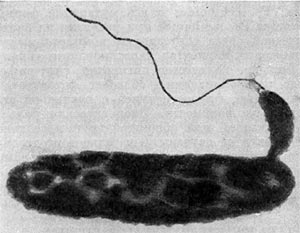
In a paper (pdf) a few years ago in Limnology and Oceanography, McManus et al. used the chloroplasts present in the kleptoplastic tide-pool ciliates, Strombidium oculatum and Strombidium styliferseen to help reveal an interesting life history. The chloroplasts were from the large multicellular macroalgae Enteromorpha clathrata which raised the question of how these unicellular cilliates were able to acquire macroalgal chloroplasts.

McManus et al. found that the cilliates don't appear to be grazing directly on the large strands of the mature algae but on the small motile reproductive cells, called zoospores, mature algal strands release.

In addition to chloroplasts, the zoospores contain a pigmented eyespot. As the photo above (from the paper's figure 1) demonstrates, the kleptoplastic cilliates contain a pigmented eyespot similar to the ones possessed by the zoospores. This suggests that the Strombidium cilliates also owe their phototaxic abilities to the alga cells they ingest.

Some other interesting points about these cilliates:
  • They are tidal organisms and live by the rhythm of the tides, becoming active during low tide when tidal pools are calm, and then attach to surfaces and encyst during high tide, presumably to prevent them from being washed out to sea and away from their food.
  • They appear to be obligate mixotrophs, unable to grow in the dark or in the absence of algal food.
Complete reference:
McManus, G. B., H. Zhang, and S. Lin. 2004. Marine planktonic ciliates that prey on macroalgae and enslave their chloroplasts. Limnol. Oceanogr. 49:308-313.

Tuesday, June 26, 2007

8 random facts meme

I have been tagged by John Dennehy (aka the Evilutionary biologist) in this 8 random facts meme. The rules are:
  • We have to post these rules before we give you the facts.
  • Players start with eight random facts/habits about themselves.
  • People who are tagged need to write their own blog about their eight things and post these rules.
  • At the end of your blog, you need to choose eight people to get tagged and list their names.
  • Don’t forget to leave them a comment telling them they’re tagged, and to read your blog.

1. When I saw I'd been tagged for this, my first though was: how big a population of facts do I need to generate in order to make sure that the list of 8 will seem random?

2. I own more that one microscope.

3. I have never known what I wanted to be when I grow up (I still don't).

4. I love the change of seasons and do my best to never complain about the weather.

5. There is a definite trend in the size of the organisms I've studies since college: penguins > tilapia > phytoplankon > bacteria ... ?

6. My dog's name is Larry

7. I live on an island off the the coast (if Spalding Grey can say that about Manhattan, I can say it about Aquidneck Island)

8. I am pretty sure this is not a random list but we'll have to check with Larry to be certain.

So many people have already done this so for the last part, I'll steal this from Tara: anyone who's not been hit already, feel free to consider yourself tagged.

Monday, June 25, 2007

In the Bay 24 Jun 2007


Dactyliosolen fragilissimus, a chain forming diatom, one of the most abundant species of phytoplankton in the bay.

Thursday, June 21, 2007

Building a better biofuel

Biofuels offer the promise of reducing our dependence on fossil fuels. The most widely used biofuel is ethanol made by the biological fermentation of corn. This process is not as green as many would like to believe because a substantial amount of energy (in the form of fossil fuel) is used in the production process. So ,the net gain is not great. Also, ethanol itself is not a terribly good fuel as it is very volatile, is not very energy dense and absorbs water.

A better biofuel would be one that does not rely on an important food crop, has a higher energy density and can be produced with as little energy input as possible. In todays issue of Nature, Román-Leshkov et al present a letter in which they report on a process by which the are able to produce 2,5-dimethylfuran (DMF) from the sugar fructose.

DMF is a better fuel than ethanol and interest in it is not new. What is new in this report is the ability to produce DMF in an industrial process requiring much less energy than previously reported methods.

The environmental impacts of this material have not been well studied and the source of fructose for the production of DMF remains an important issue but this type of innovative thinking has a place in our efforts to move away from dependence on fossil fuels.

Complete citation:
Roman-Leshkov, Y., C. J. Barrett, Z. Y. Liu, and J. A. Dumesic. 2007. Production of dimethylfuran for liquid fuels from biomass-derived carbohydrates. Nature 447:982-985.

Cow burps and global warming

Methane is a greenhouse gas and methane released into the atmosphere contributes to global climate change. Compared to CO2, relatively little methane is released but it is ~ 20 times more effective at absorbing energy than CO2 so its contribution is significant. There are both human influenced and natural sources of methane. These including rice patties, swamp gasses, termites and ruminants such as cows.

My friend (and a reader of this blog) Marek Kirs send me this link to a story on NPR about attempts to reduce the amount of methane produced by cows. The idea is to adjust the types of food they eat or even manipulate their gut microbial community to eliminate the methanogenic organisms responsible for the gas production.

One of the points the researchers make is that the production of methane is the result of incomplete oxidation of food eaten by the cows. So, the elimination of methanogenesis could result in increases production of meat and milk from these animals. Cattle food conversion ration are around 12%, and any increases would likely be small but the idea is to have enough of an increase to offset any increased cost to the producers.

Wednesday, June 20, 2007

Gut bacteria metabolic diversity

Another paper exploring microbial diversity of the human gut has been released in PLoS Biology. It is open source so go read it for yourself! There is also a summary article on the data intended for a lay audience. The data presented in the paper is very interesting. They sequenced the genomes of two gut bacteria, Bacteroides vulgatus and Bacteroides distasonis, and contrasted their metabolic potential (the genes present in the genome) with the well studied species Bacteroides thetaiotaomicron. This comparison does provide some evidence that niche specialization plays a role in maintaining the diversity of the gut microbiota.

The importance of studying the gut microbiota is summed up nicely in the beginning of the author summary:

"Our microbial partners provide us with certain features that we have not had to evolve on our own. In this sense, we should consider ourselves to be a supraorganism whose genetic landscape includes both our own genome as well as the genomes of our resident microbes, and whose physiologic features are a synthesis of human and microbial metabolic traits."

I would have worded the first sentence differently as saying 'have not had to" sounds a bit too teleological to me.

I am also troubled by their use (later in the introduction) of the term "top-down selection" in reference to host driven selective forces that they argue are responsible for maintaining a high degree of functional redundancy in the gut community. I am not aware that the term top-down selection, as used by the broader ecology community, is considered a force for the maintenance of ecosystem stability.

The end of the paper lists a set open questions that it would be very nice to have answers to:
"Do we share an identifiable core “microbiome”? If there is such a core, how does the shell of diversity that surrounds the core influence our individual physiologic properties? How is the human microbiome evolving (within and between individuals) over varying time scales as a function of our changing diets, lifestyle, and biosphere? Finally, how should we define members of the microbiome when microbes possess pan-genomes (all genes present in any of the strains of a species) with varying degrees of “openness” to acquisition of genes from other microbes?"

Sunday, June 17, 2007

Bacterial predators

With the rise of antibiotic resistance in important bacterial pathogens, attention is being focused on alternative treatments for bacterial infections. The most prominent among these is phage therapy. Another potential antimicrobial agent is the predatory bacteria Bdellovibrio and related species

I am not sure how likely it is that these bacteria will ever find use as therapeutic agents, but they are pretty amazing organisms and they definitely have the potential to be used in this way.

Bdellovibrio have a truly predatory life style. They require specific species of gram negative bacteria to grow. The cells are small and highly motile. When they encounter a susceptible host cell, they attach themselves to the outer surface of the cell, bore a hole in the cell wall and push themselves into the periplasmic space (the space between the outer membrane and cytoplasmic membrane of gram negative bacteria). Once there the cell is killed and its contents consumed. Bdellovibrio reproduces within the cell and once the contents of the prey are consumed, the daughter cells will burst out of the shell of the dead prey cell and head off to find other targets.

Thursday, June 14, 2007

454


DNA sequencing has revolutionized biology. Not too long ago obtaining the sequence of an individual gene was a big deal. Now sequencing entire genomes is becoming routine. To obtain the sequence of an organism's entire genome, the genome is broken into fragments and many many fragments are sequenced individually using a PCR based method. In the standard process, the sequence generated from each fragment is about 500 to 1,000 bases long. To generate the sequence of the genome, computers are used to align all of the data and identify contiguous sequences that can then be assembled. In order to be confident in the data (errors are made in the process), the entire genome is sequenced multiple times. At least 4 to 5 x coverage is considered necessary for good data.

A typical bacterial genome of 3.5 mega-bases sequenced to 5x coverage amounts to over 21,000 individual sequencing runs. For organisms (such as humans) which have multiple chromosomes each chromosome is sequenced individually. With about 3 billion bases in the human genome and 10x coverage, the data contained in the human genome project represents an enormous amount of sequencing and alignment effort.

A relatively new innovation called 454 sequencing has sped up the process. 454 is still based on PCR but it is much faster as the sequence is read as the PCR progresses. The trade off to the increased speed is that each individual read is somewhat shorter making assembly more challenging.

One 454 application that is becoming more and more widespread is the sequencing of multiple strains of a species of bacteria. In this type of application the genome of one strain is already known. The assembly of the genome of each successive strain is facilitated by the use of the original strains sequence as a template.

454 sequencing was used to determine James Watson's genome. The whole genome was assembled in two months at a cost of $1 million. The assembly was almost certainly accelerated by aligning short reads of Watson's DNA with the pre-existing human genome sequence.

image from the tutorial found on 454 life sciences web page